Why MLA Citations Are Flagged by AI Detectors (And What This Means for IB Students)
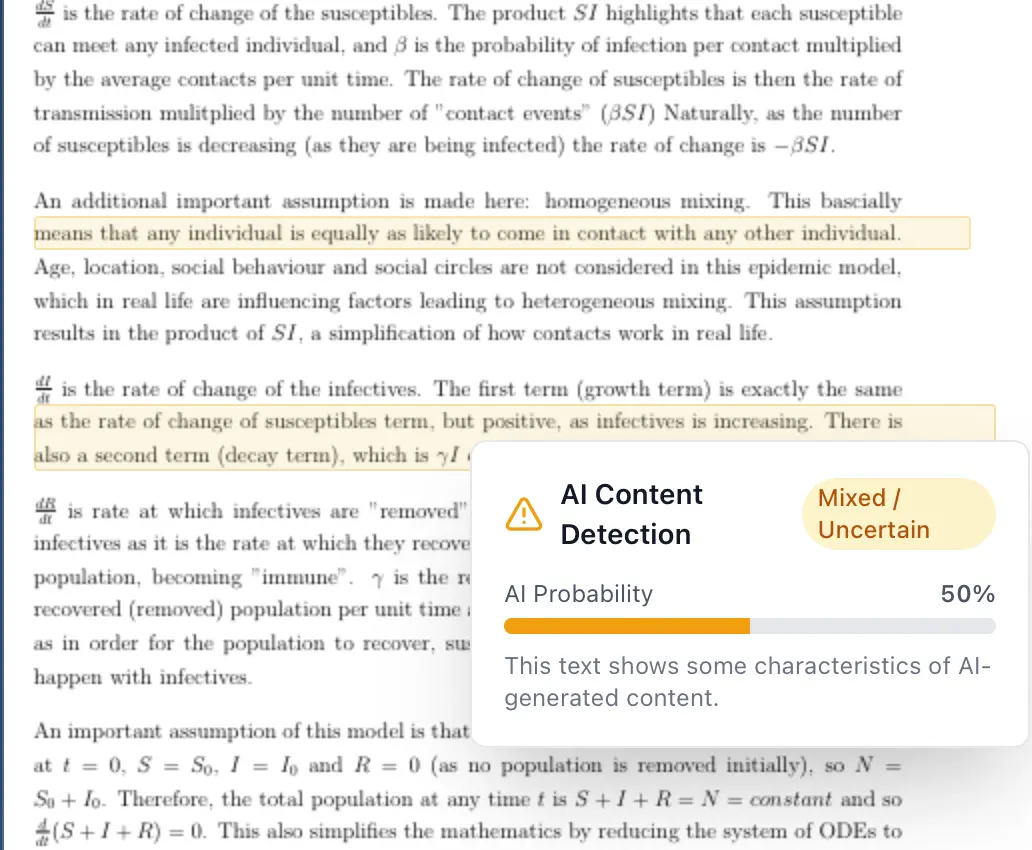
If you've ever run your perfectly legitimate IB essay through an AI detector only to see your citations highlighted as "AI-generated," you're not alone. This frustrating phenomenon has left countless students confused and worried about their academic integrity. The irony? Your properly formatted MLA citations are being flagged as artificial intelligence content precisely because they follow standardized formatting rules. If you're also unsure about tool safety, pair this with Is Marksy Safe? Academic Integrity and AI Data Privacy. Let's dive into why this happens and what you need to know to protect your work.
Introduction: The Citation Paradox
AI detection tools have become ubiquitous in educational institutions, designed to identify content generated by language models like ChatGPT. However, these tools have an unexpected blind spot: they often flag standard MLA citations as AI-generated content. This creates a paradoxical situation where students who follow proper academic formatting conventions find their work under scrutiny, while the very citations that demonstrate academic rigor trigger false positives.
For IB students who spend countless hours crafting Extended Essays, Internal Assessments, and other research-based assignments with meticulous bibliographies, this issue is particularly concerning. Understanding why AI detectors struggle with citations and what you can do about it is essential for maintaining your academic integrity and peace of mind. Once your draft is ready, you can also sanity-check rubric alignment in Assessment Grading.
Struggling with IB Assessments?
Get instant, detailed feedback on your work with AI that understands IB criteria.
Why AI Detectors Flag MLA Citations
AI detection software works by analyzing patterns in text that resemble machine-generated content. Unfortunately, several characteristics of properly formatted MLA citations make them appear suspiciously "AI-like" to these algorithms:
1. Extreme Consistency and Pattern Recognition
MLA citations follow rigid, standardized formatting rules. Every citation has:
- Consistent punctuation placement (periods, commas, colons in exact positions)
- Predictable capitalization patterns
- Formulaic structure (Author. "Title." Publisher, Date.)
- Uniform italicization and quotation mark usage
AI language models are exceptionally good at producing consistently formatted text following specific patterns. When AI detectors encounter text with this level of mechanical consistency, they associate it with AI generation. The algorithm essentially thinks: "This is too perfect to be human."
2. Low Perplexity Scores
AI detectors measure "perplexity" – essentially how surprising or unpredictable the text is. Human writing tends to have higher perplexity because we vary our sentence structure, make occasional formatting mistakes, and don't always follow rules perfectly.
MLA citations, by design, have extremely low perplexity. They are:
- Highly predictable in structure
- Formulaic in presentation
- Repetitive across multiple entries
- Free of creative variation
This low perplexity triggers red flags in AI detection algorithms that interpret it as machine-generated content.
3. Repetitive Structural Elements
A typical Works Cited page contains multiple entries following the exact same format. Consider this example:
Smith, John. "The Impact of Climate Change." Environmental Studies, vol. 45, no. 2, 2023, pp. 112-125.

Johnson, Mary. "Economic Policies in Developing Nations." Journal of Economics, vol. 12, no. 4, 2024, pp. 78-91.

Williams, Robert. "Historical Analysis of Trade Routes." History Quarterly, vol. 33, no. 1, 2025, pp. 45-67.
The repetitive structure across multiple citations compounds the pattern recognition issue. AI detectors see this repetition as characteristic of AI-generated lists or templates.
4. Lack of Natural Language Flow
Human writing typically flows with natural language transitions, varied sentence structures, and personal voice. Citations are the opposite:
- They use abbreviations (vol., no., pp., ed.)
- They employ technical formatting (em dashes, periods after authors, parenthetical dates)
- They lack conversational tone
- They follow strict grammatical conventions that differ from prose
This deviation from natural language patterns can trigger AI detection algorithms designed to identify text that doesn't "sound human."
5. Universal Formatting Standards
MLA format is universally taught and standardized. When millions of students worldwide format citations identically, the resulting text patterns become highly recognizable to AI detectors. The algorithms may interpret this widespread uniformity as evidence of machine generation rather than adherence to academic convention.
What This Means for IB Students
For IB students working on Extended Essays, Internal Assessments, and other citation-heavy assignments, this creates several concerns:
Academic Integrity Questions
When AI detectors flag your citations, teachers or assessment systems may question whether your work is original. This can be particularly stressful during IB assessments where academic integrity is paramount.
Time-Consuming Explanations
You may need to explain to teachers or examiners why your citations triggered AI detection software, requiring additional documentation or verification of your research process.
False Positives Affecting Overall Scores
Some AI detection tools provide an overall "AI probability" score for entire documents. High citation counts can inflate this score, potentially flagging legitimate work even when the actual essay content is entirely human-written.
Impact on Confidence
Seeing your carefully researched work flagged as "AI-generated" can be demoralizing and create anxiety about submitting future assignments.
How to Protect Your Work
While you can't change how AI detectors function, you can take proactive steps to protect your academic work:
1. Document Your Research Process
Keep detailed records of your research journey:
- Annotated bibliographies showing your reading and analysis
- Research notes with timestamps
- Draft versions showing your writing evolution
- Screenshots of sources you accessed
This documentation provides evidence of genuine research and can refute false AI detection claims.
2. Use Citation Management Tools Transparently
Tools like Zotero, Mendeley, or EndNote help format citations correctly. Mention in your process reflection (for Extended Essays) or internal comments that you used these legitimate academic tools.
3. Understand Your School's AI Detection Policy
Ask your IB coordinator or teachers:
- Which AI detection tools does the school use?
- How are citation-heavy sections evaluated?
- What is the appeals process if your work is wrongly flagged?
- Do examiners understand the citation false-positive issue?
4. Include Process Documentation
For Extended Essays and other major IB assessments:
- Use the RPPF (Reflections on Planning and Progress Form) to document your authentic research process
- Include a research timeline
- Reference specific library visits, interviews, or archival research
- Mention challenges you encountered that demonstrate genuine intellectual engagement
5. Separate Citations When Testing
If you're running your work through AI detection for peace of mind before submission:
- Test your main essay text separately from the bibliography
- This gives you a clearer picture of whether your actual writing is flagged
- Document both scores to show the citation effect
6. Educate Your Teachers
Share information about the citation false-positive phenomenon with your teachers and supervisors. Many educators are unaware of this technical limitation in AI detection software.
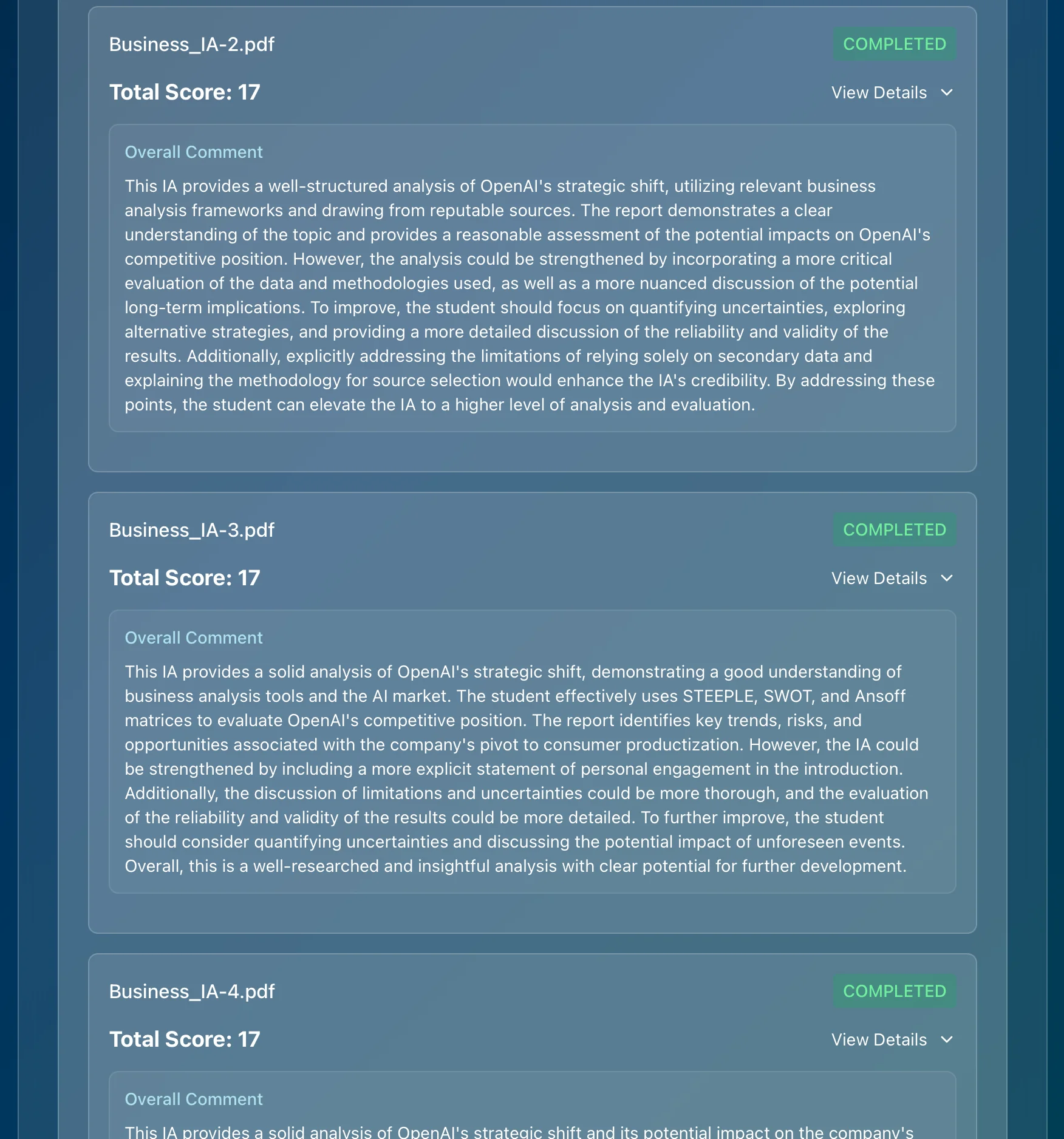
Pro Tip: Get AI-Powered Grading
Stop second-guessing your grades. Get instant feedback aligned with official IB rubrics.
The Bigger Picture: Limitations of AI Detection
The citation flagging issue reveals a broader truth: AI detection technology is imperfect and still evolving. These tools struggle with:
- Technical writing: Lab reports, scientific papers, and formal documents with standardized terminology
- Formulaic content: Business letters, legal documents, and academic conventions
- Multilingual writing: Students writing in non-native languages may use simpler, more predictable structures
- Citation-heavy work: Research papers, literature reviews, and annotated bibliographies
Understanding these limitations helps contextualize why your citations might be flagged and reinforces the importance of holistic assessment methods that consider the entire research and writing process, not just algorithmic scores.
Technology and Modern Assessment: The Role of AI
While AI detection tools have limitations, AI technology can also be a powerful ally for IB students when used appropriately. The key is understanding the difference between AI-powered assistance and AI-generated content.
Marksy represents the positive application of AI in IB education. Unlike AI writing tools, Marksy is an AI grading assistant that helps you improve your own work through instant, detailed feedback based on official IB rubrics. Rather than writing content for you, Marksy analyzes your work criterion-by-criterion, helping you understand exactly where your Extended Essay, Internal Assessment, or other IB assignment meets or exceeds expectations.
By leveraging AI for feedback rather than content creation, you maintain full academic integrity while benefiting from technology that helps you grow as a writer and researcher. Marksy's rubric-aligned scoring shows you how your citations contribute to meeting IB assessment criteria, ensuring your properly formatted MLA references strengthen rather than undermine your academic work.
Conclusion: Citations Are Academic Integrity, Not AI Cheating
The irony of AI detectors flagging properly formatted MLA citations reveals a fundamental truth: algorithmic assessment cannot replace human judgment in academic evaluation. Your citations represent hours of research, critical thinking, and adherence to scholarly standards – the very opposite of academic dishonesty.
Key Takeaways:
- MLA citations are flagged because they follow predictable patterns that AI detectors associate with machine-generated content
- Low perplexity and high consistency in citations trigger false positives
- Document your research process to provide evidence of authentic academic work
- Understand your school's policies and be prepared to explain the technical limitations of AI detection
- AI detection tools are imperfect and should be one of many assessment methods, not the sole determinant of academic integrity
Next Steps:
- Save all your research notes and drafts throughout your IB assignment process
- Keep a research journal documenting your sources, reflections, and intellectual journey
- Communicate with your teachers about AI detection limitations regarding citations
- Focus on genuine research and analysis rather than worrying excessively about detection algorithms
- Use legitimate AI feedback tools like Marksy to improve your work while maintaining academic integrity
Ready to receive detailed, criterion-specific feedback on your IB work without compromising academic integrity? Try Marksy for free and discover how AI-powered assessment can help you achieve your full potential while keeping your work authentically yours. Get instant rubric-aligned feedback on your Extended Essays, Internal Assessments, and more. Sign up for a free trial today and experience the future of IB assessment done right.