- Type II diabetes, a widespread and challenging health problem, is due to insulin resistance, which results in raised blood glucose. Alpha-glucosidase enzymes catalyse the hydrolysis of carbohydrates. Inhibition of the enzymes slows the absorption of glucose in the intestine and thus slows the rise in blood glucose. A study examined the inhibitory effect of five species of seaweed (Palmaria palmata, Saccharina latissima, Fucus vesiculosus, Ascophyllum nodosum and Alaria esculenta) on alpha-glucosidase. Dried seaweed extracts made with water or ethanol were added to maltose. The solutions were incubated, then analysed for glucose content.
The graph shows percent inhibition of alpha-glucosidase with different seaweed extracts compared with uninhibited enzyme activity (control).
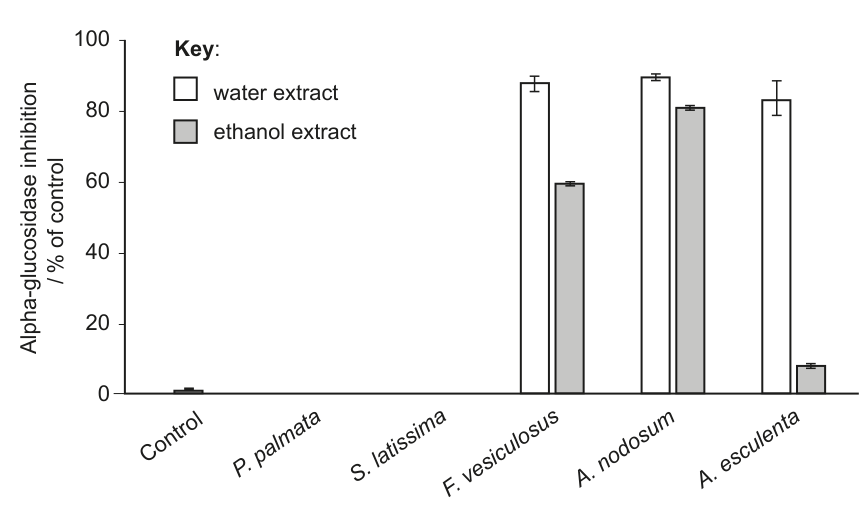
(a) Suggest the control for the experiment. [1]
(b) Identify which seaweed extracts do not inhibit alpha-glucosidase. [1]
The effect of different concentrations of extracts was tested using both water (H2O) and ethanol (EtOH).
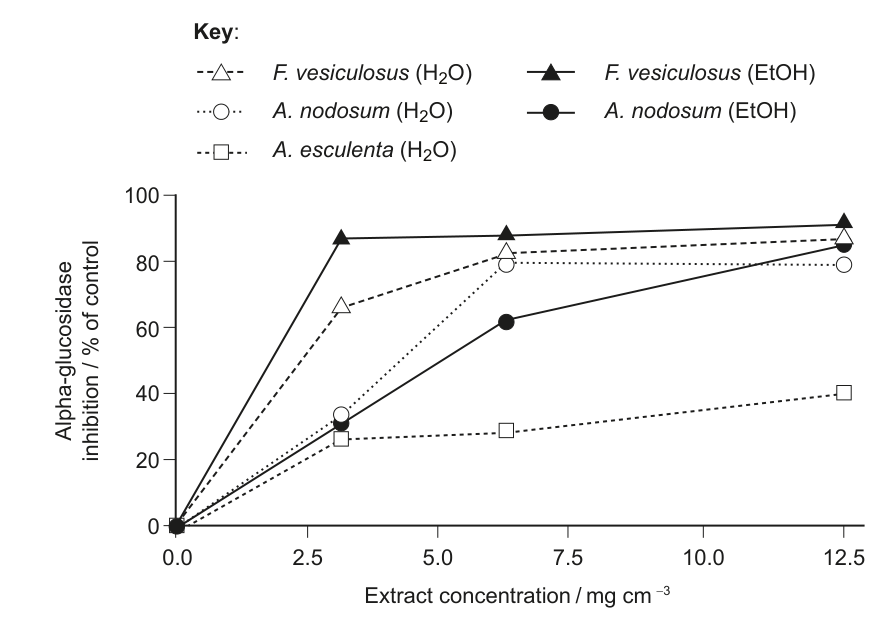
(c) Suggest why only the water extract of A. esculenta was tested. [1]
(d) Analyse the effect of increasing concentrations of seaweed extracts. [2]
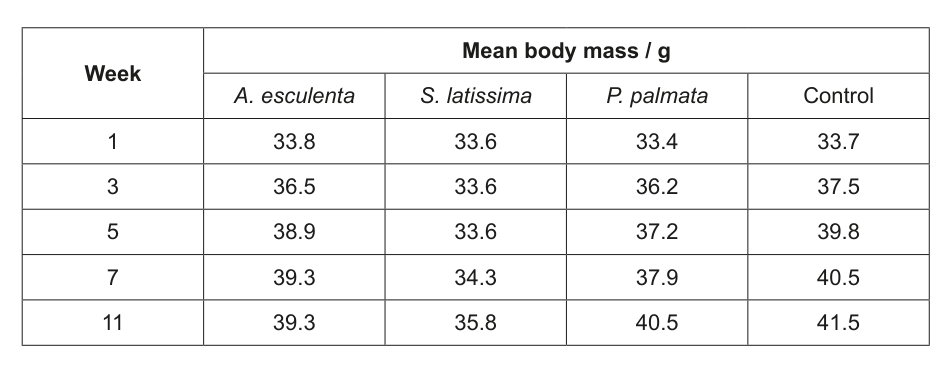
Lifestyle factors and diet can trigger the onset of insulin resistance. A study investigated the preventative effects of adding equal masses of three of the seaweed species to the diet of 50 genetically obese and diabetic mice. A control diet consisted of an equal total mass of food without seaweed. The mice were the same age and of similar body mass at the beginning of the experiment (week 1). The table shows the mean body mass of the groups over the course of the 11-week investigation.
| Week | Mean body mass / g | |||
|---|---|---|---|---|
| A. esculenta | S. latissima | P. palmata | Control | |
| 1 | 33.8 | 33.6 | 33.4 | 33.7 |
| 3 | 36.5 | 33.6 | 36.2 | 37.5 |
| 5 | 38.9 | 33.6 | 37.2 | 39.8 |
| 7 | 39.3 | 34.3 | 37.9 | 40.5 |
| 11 | 39.3 | 35.8 | 40.5 | 41.5 |
(e) Calculate the greatest increase in mean body mass over 11 weeks. [1]
(f) Distinguish between the results for S. latissima and P. palmata. [2]
Glycated hemoglobin (HbA1c) is formed when glucose in blood plasma binds spontaneously to hemoglobin. A high percentage of HbA1c indicates that glucose levels in the blood have been raised for much of the time.
At the beginning of the investigation, after 8 hours without food, blood was taken from all the mice and tested for HbA1c levels. The levels were similar for all mice. The graph shows the levels of HbA1c after 10 weeks of treatment with the seaweed extracts.
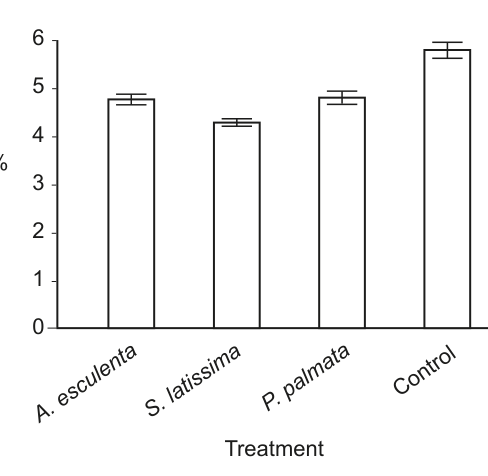
(g) Compare and contrast the HbA1c results of all seaweed and control treatments. [2]
(h) Using all the data, evaluate the evidence for health benefits of adding dried S. latissima to the diet. [3]