- The table shows the numbers of five different species of algae growing in the River Trent in the United Kingdom from May to October 1939, at different distances from where untreated sewage had entered the river.
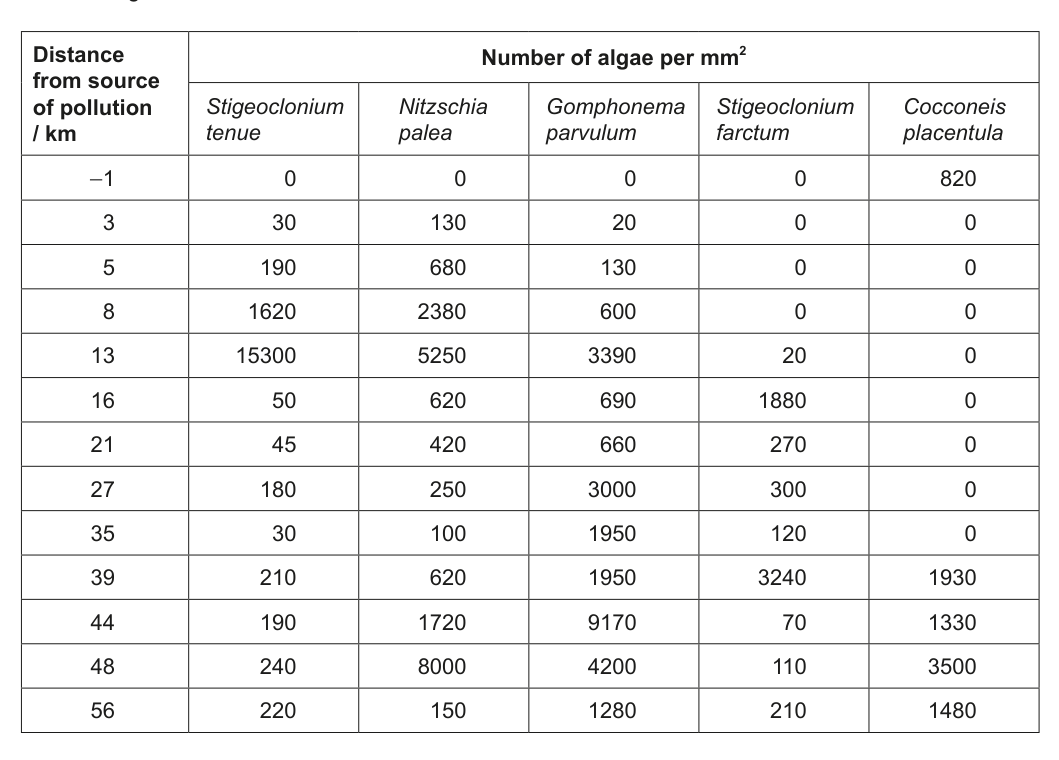
(a) State the species with the greatest growth rate between 13 and 16 kilometres from the source of pollution in the River Trent. [1]
(b) Describe one method that could have been used to record the number of algae along the River Trent. [2]
(c) (i) Outline the use of indicator species to calculate the biotic index. [1]
(ii) Using the data, deduce with a reason which species of alga could be used as an indicator of pollution in the River Trent. [2]