Question 15

From Biology SL Paper 3 (November 2024, TZ2)

  1. Each biome has unique characteristics in terms of organisms, weather, nutrient flow and stores.

(a) The model shows world biomes in relation to mean annual precipitation and mean annual temperature.
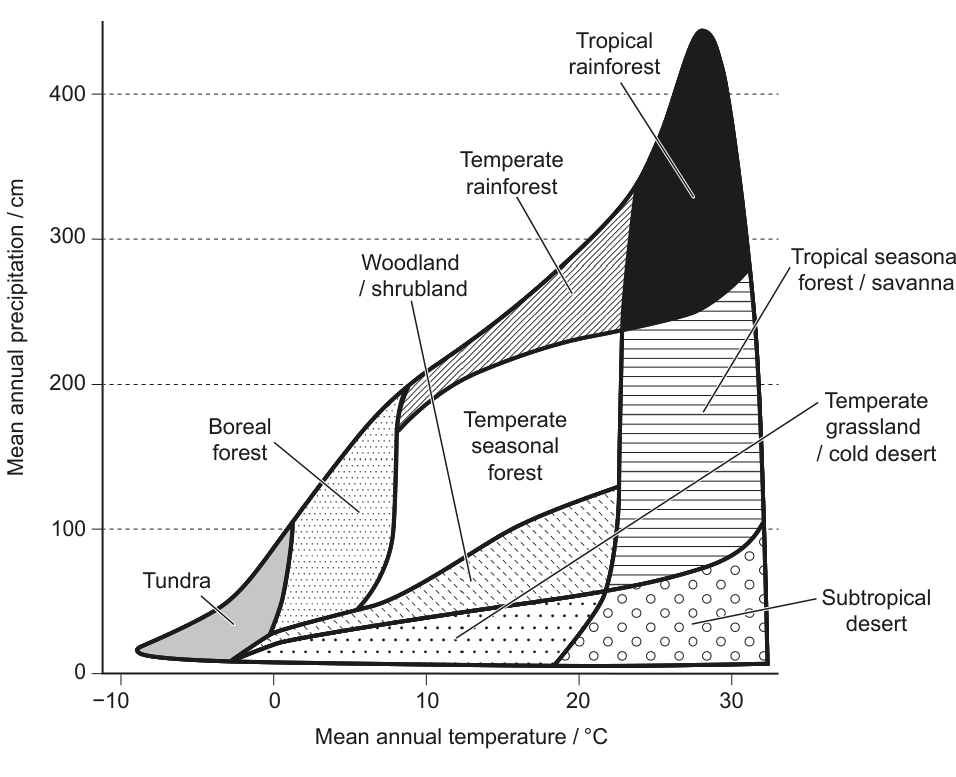
A graph with 'Mean annual temperature / °C' on the x-axis and 'Mean annual precipitation / cm' on the y-axis, displaying different biomes such as Tundra, Boreal forest, Woodland/shrubland, Temperate seasonal forest, Temperate rainforest, Tropical rainforest, Tropical seasonal forest/savanna, Temperate grassland/cold desert, and Subtropical desert.

(i) State the mean annual temperature range in deserts. [1]

(ii) State the mean annual precipitation range in tropical rainforests. [1]

(b) The Gersmehl diagrams show the inter-relationships between nutrient flows and stores in desert and tropical rainforest.
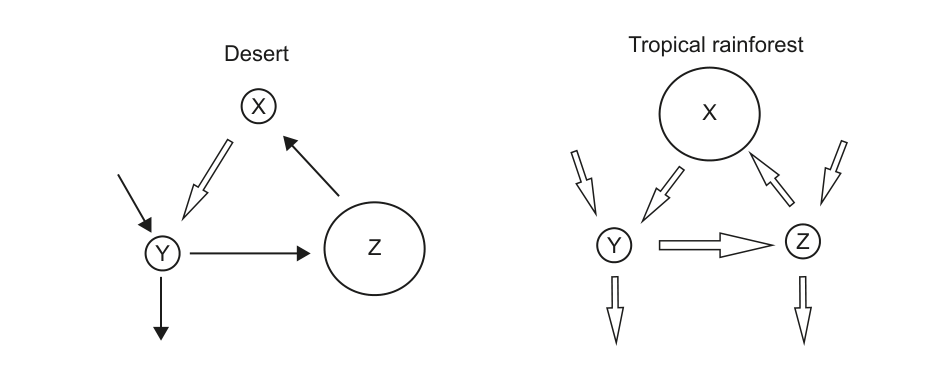
Two Gersmehl diagrams side-by-side, one for 'Desert' and one for 'Tropical rainforest'. Each diagram shows three interconnected circles labeled X, Y, and Z, with arrows indicating nutrient flows between them and to/from outside the system.

Deduce with a reason the nutrient store labelled Z. [1]

Textbook topics in this question

Review the exact course sections assessed by each question part.

Mixed-topic question