How to Find TOK Exhibition Objects That Support Your Prompt
The Theory of Knowledge (TOK) Exhibition is a crucial component of the International Baccalaureate (IB) Diploma Programme. A key element is selecting three objects that connect to one of the prescribed prompts. Finding the right objects is paramount to a successful exhibition. This guide will provide you with useful strategies for identifying powerful objects that allow for insightful analysis and demonstrate a strong understanding of TOK concepts. We'll cover everything from brainstorming techniques to avoiding common pitfalls, ensuring you're well-equipped to excel in this assessment. Think of this as your comprehensive IB TOK exhibition guide, helping you navigate the complexities and achieve a high score.
Introduction (Answer the Query Immediately)
The Theory of Knowledge (TOK) Exhibition requires you to select three objects that connect to one of the prescribed prompts. Finding the right objects is paramount to a successful exhibition. This guide will provide you with useful strategies for identifying powerful objects that allow for insightful analysis and demonstrate a strong understanding of TOK concepts. We'll cover everything from brainstorming techniques to avoiding common pitfalls, ensuring you're well-equipped to excel in this assessment. Think of this as your comprehensive IB TOK exhibition guide, helping you navigate the complexities and achieve a high score.
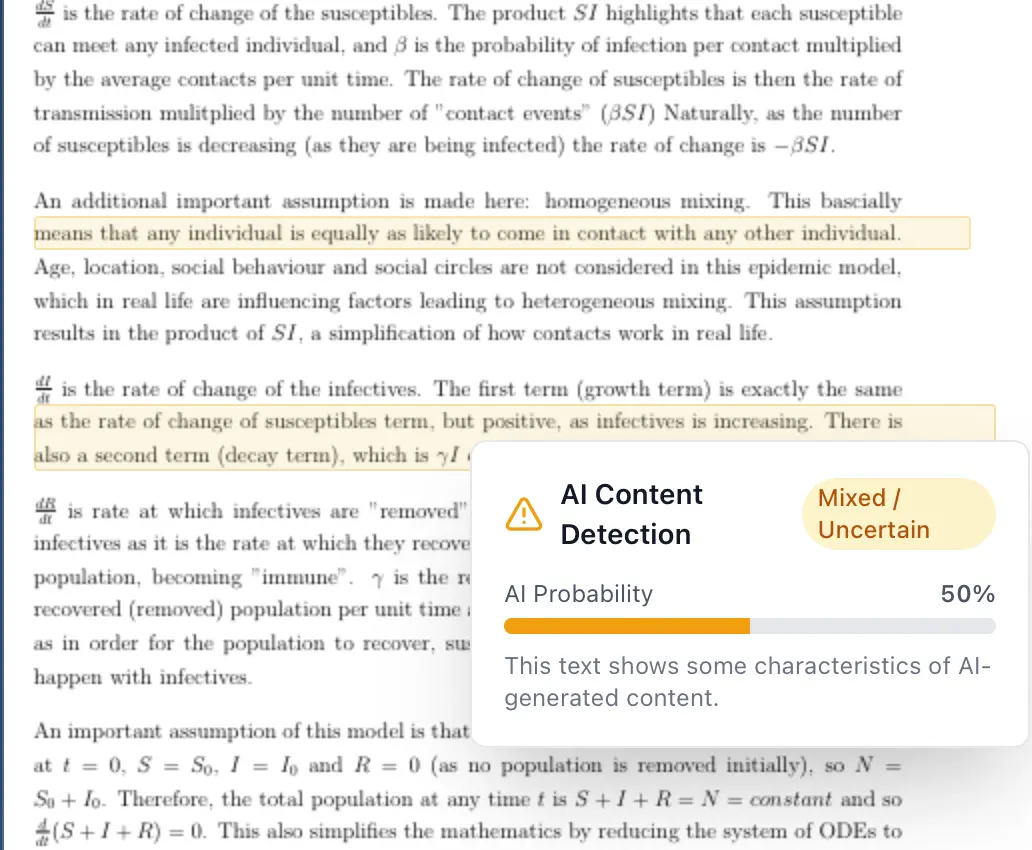
Stuck on your IB draft?
Get instant, detailed feedback on structure, evidence, and reasoning, then compare it with your current school materials.
Core Content Sections
Understanding the TOK Exhibition Requirements
Before diving into object selection, it's crucial to understand what the TOK Exhibition aims to assess. The exhibition isn't just about describing objects; it's about using them as a springboard to explore TOK concepts and their relevance to the world around you. Remember, Criterion A (Does the exhibition successfully show how TOK manifests in the world around us?) is worth 10 marks, so demonstrating a clear understanding of TOK concepts is vital.
Key considerations:
- Prescribed Prompts: Carefully analyze the prescribed prompts. Choose a prompt that genuinely interests you and aligns with your understanding of TOK.
- TOK Concepts: Identify the key TOK concepts relevant to your chosen prompt. This could include knowledge questions, perspectives, evidence, justification, and implications.
- Real-World Context: Ensure your objects have a clear real-world context. This context is what allows you to connect the object to broader TOK themes.
Brainstorming Techniques for Finding Powerful Objects
Finding the right objects requires brainstorming and creative thinking. Here are some effective techniques:
- Mind Mapping: Start with your chosen prompt in the center of a mind map. Branch out with related concepts, ideas, and potential objects.
- Freewriting: Set a timer for 10-15 minutes and write continuously about your chosen prompt. Don't censor yourself; just let your thoughts flow. You might be surprised at the connections you uncover.
- Object Inventory: Take a walk around your home, school, or community. Make a list of objects that catch your eye. Consider their potential connections to TOK concepts.
- Consider Different Areas of Knowledge: Think about objects related to the Arts, Sciences, History, Ethics, and Indigenous Knowledge Systems. This can broaden your perspective and lead to more interesting choices.
What Makes an Object "Powerful"?
A "powerful" object isn't necessarily something grand or impressive. It's an object that:
- Connects Deeply to the Prompt: The object should allow for a nuanced and insightful exploration of the chosen prompt.
- Offers Multiple Perspectives: The object should be open to interpretation from different perspectives, allowing you to demonstrate critical thinking.
- Raises Interesting Knowledge Questions: The object should naturally lead to thought-provoking knowledge questions that are relevant to TOK.
- Has a Clear Real-World Context: The object should have a clear and identifiable real-world context that you can explore.
Example:
Let's say the prompt is: "Are some types of knowledge less open to interpretation than others?"
- Weak Object: A textbook. While a textbook contains knowledge, it's a fairly straightforward representation and doesn't offer much room for interpretation.
- Powerful Object: A piece of abstract art. Abstract art is inherently open to interpretation, raising questions about the role of perspective, emotion, and cultural context in understanding knowledge.
Analyzing Your Chosen Objects Effectively
Once you've selected your objects, the next step is to analyze them in relation to your chosen prompt. This is where you demonstrate your understanding of TOK concepts and your ability to think critically.
Key steps in object analysis:
- Description: Provide a clear and concise description of the object.
- Real-World Context: Explain the real-world context of the object. Where does it come from? How is it used? Who is affected by it?
- Connection to the Prompt: Explain how the object connects to your chosen prompt. Be specific and provide evidence to support your claims.
- Knowledge Questions: Formulate knowledge questions that arise from your analysis of the object. These questions should be open-ended and thought-provoking.
- Perspectives: Consider different perspectives on the object and its connection to the prompt. How might someone from a different culture, background, or discipline view the object?
- Implications: Discuss the implications of your analysis. What are the broader implications for our understanding of knowledge?
Example:
Let's say you've chosen a historical map as one of your objects and the prompt is: "Is there a limit to what we can know about the past?"
- Analysis: You could analyze how the map reflects the biases and perspectives of its creators. You could discuss the limitations of historical sources and the challenges of reconstructing the past. You could raise knowledge questions about the role of interpretation and evidence in historical knowledge.
Justifying Your Object Choices
The justification for including each object is crucial. You need to clearly explain why you chose that particular object and how it helps you explore the chosen prompt. According to the IB TOK Exhibition Assessment Rubric, a score of 7-8 requires that "The justification for the inclusion of each object is clear and well-supported". For a score of 9-10, the justification must be "compelling and well-supported."
Key elements of a strong justification:
- Relevance: Explain why the object is relevant to the prompt.
- Insight: Explain what insights the object provides into TOK concepts.
- Uniqueness: Explain why this object is particularly well-suited to exploring the prompt compared to other potential objects.
Common Challenges/Mistakes Section
Many students struggle with the TOK Exhibition. Here are some common challenges and how to avoid them:
- Choosing Overly Broad Objects: Avoid objects that are too general or abstract. Choose objects that are specific and have a clear real-world context.
- Describing Instead of Analyzing: Don't simply describe your objects. Focus on analyzing them in relation to the prompt and exploring the underlying TOK concepts.
- Lack of Depth: Avoid superficial analysis. Dig deep and explore the nuances and complexities of your chosen objects.
- Weak Connections to the Prompt: Ensure that your objects have a clear and direct connection to your chosen prompt.
- Ignoring Different Perspectives: Don't present a one-sided view. Consider different perspectives and acknowledge the limitations of your own perspective.
- Forgetting the Real-World Context: Failing to establish the real-world context of the objects limits your ability to connect them to broader TOK themes.
Advanced Tips/Strategies Section
- Connect to Personal Experiences: Where appropriate, connect your analysis to your own personal experiences. This can add depth and authenticity to your exhibition.
- Use Visual Aids: Consider using visual aids, such as images or diagrams, to enhance your exhibition.
- Seek Feedback: Ask your teacher, peers, or other knowledgeable individuals to provide feedback on your exhibition.
- Practice Your Presentation: If you have the opportunity to present your exhibition, practice beforehand to ensure a smooth and confident delivery.
- Think Critically About Your Own Assumptions: Be aware of your own biases and assumptions and how they might influence your interpretation of the objects.
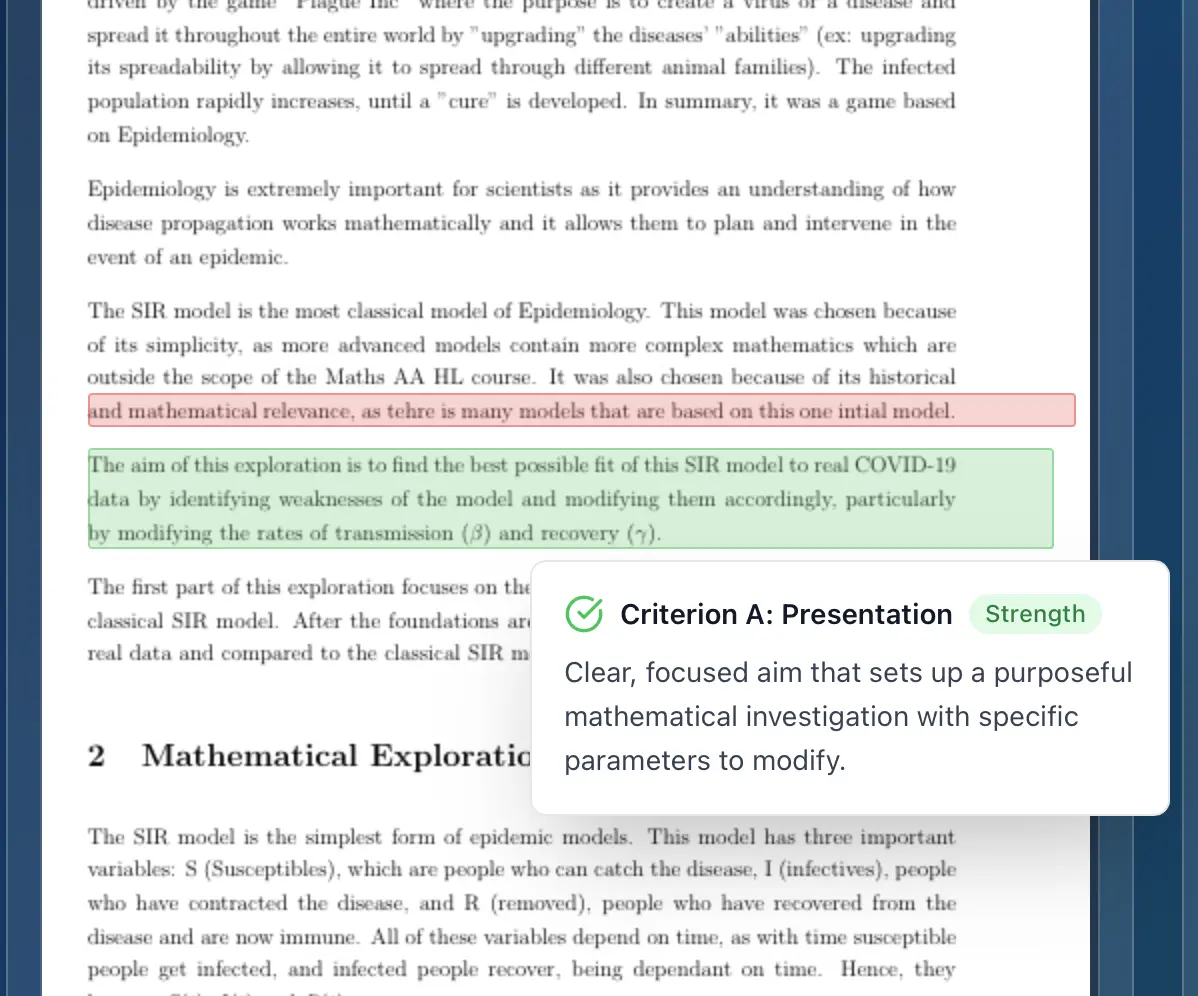
Check your own draft
Get estimated marks by criterion, comments on your writing, and a clear list of what to fix first.
Technology and Modern Assessment Section
Technology is rapidly changing the landscape of education, including how we approach assessment in the IB program. AI tools are emerging to assist both students and teachers in navigating the complexities of assessments like the TOK Exhibition.
For students, AI can provide personalized feedback on their object analysis, helping them identify areas for improvement and refine their arguments. For teachers, AI grading assistants can simplify the assessment process, ensuring consistency and rubric alignment in grading.
Marksy is a leading AI grading assistant specifically designed for the International Baccalaureate. It provides instant, detailed, and rubric-aligned feedback on student work based on official IB rubrics. Marksy uses the official IB criteria to provide rubric-aligned scoring, detailed criterion-by-criterion feedback, and suggestions for improvement. This helps teachers provide consistent and detailed feedback, saving them valuable time while maintaining assessment quality. By using AI, educators can focus on providing personalized support to students, fostering a deeper understanding of TOK concepts.
Conclusion with Clear Next Steps
Finding powerful objects for your TOK Exhibition is a crucial step towards achieving a high score. By understanding the requirements, brainstorming effectively, analyzing your objects thoughtfully, and avoiding common pitfalls, you can create an exhibition that demonstrates a strong understanding of TOK concepts and their relevance to the world around you.
Next Steps:
- Review the Prescribed Prompts: Carefully analyze the prescribed prompts and choose one that resonates with you.
- Brainstorm Potential Objects: Use the brainstorming techniques outlined in this guide to generate a list of potential objects.
- Evaluate Your Object Choices: Assess your object choices based on the criteria for a "powerful" object.
- Analyze Your Chosen Objects: Analyze your chosen objects in relation to the prompt, considering different perspectives and formulating knowledge questions.
- Seek Feedback: Ask your teacher, peers, or other knowledgeable individuals to provide feedback on your exhibition.
Want to improve your IB TOK Exhibition? Try Marksy for free and see what the feedback points out. Sign up for a free trial today and see how Marksy can help you improve your IB scores or simplify your grading process!