TOK Essay Criteria Explained: How to Score High in Each Band
Understanding the essay theory of knowledge criteria is crucial for success in the IB program. This guide provides a clear breakdown of the IB essay grading rubric, offering clarity on what examiners look for and how to achieve top marks. We'll explore each criterion in detail, providing practical tips and examples to help you excel in your essay IA requirements.
What is the Essay Theory of Knowledge?
The Theory of Knowledge (TOK) essay is a core component of the International Baccalaureate (IB) Diploma Programme. It's an externally assessed piece of work where students critically reflect on the nature of knowledge itself. Students choose one prescribed title (a question) released by the IB and develop an essay that explores the implications of this title, using real-life examples and reasoned arguments. The goal is to demonstrate an understanding of TOK concepts and apply them to real-world situations.
Stuck on your IB draft?
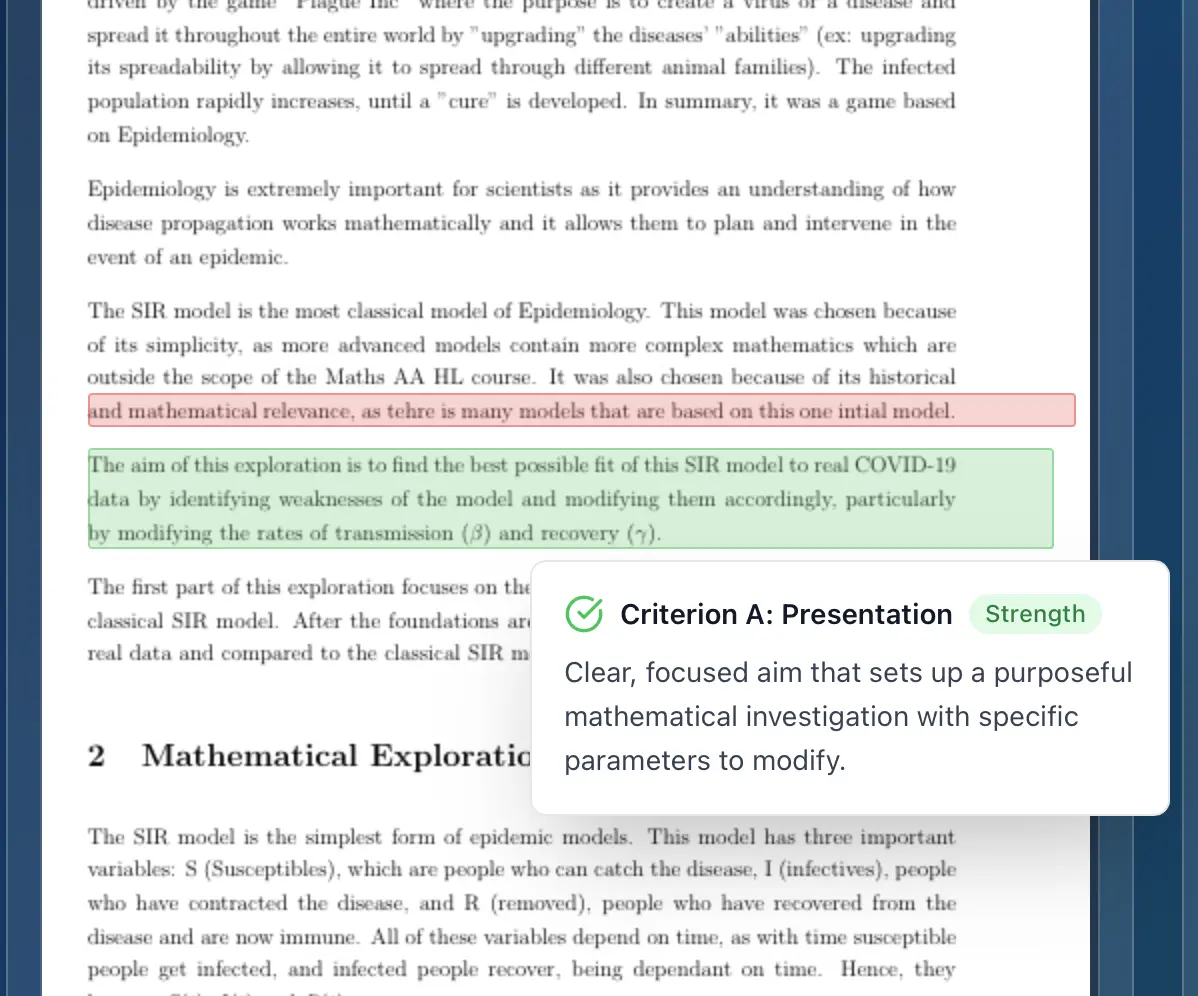
Get instant, detailed feedback on structure, evidence, and reasoning, then compare it with your current school materials.
Understanding the Grading Criteria
The TOK essay is not split into separate criteria. Examiners give one holistic mark out of 10, based on how clearly, coherently, and critically the essay explores your prescribed title. The mark bands below describe what each level looks like, and the tips show how to move up a band.
Detailed Breakdown of Essay Theory of Knowledge Criteria
Let's delve into each criterion of the TOK essay assessment rubric, providing detailed explanations, mark band descriptions, and tips for success.
Criterion names, marks, and mark bands below follow the IB subject guide. The band descriptions are our own plain-English summaries, so check your subject guide for the exact wording.
Criterion A: Essay as a whole (10 marks)
What it assesses: Whether the essay explores the prescribed title clearly, coherently, and critically.
Mark bands:
- 0 marks: Nothing in the work reaches the lowest band.
- 1-2 marks: Rudimentary: only weakly linked to the title, with descriptive points or unsupported claims.
- 3-4 marks: Basic: linked to the title with superficial links to areas of knowledge; largely descriptive, with limited, unclear arguments.
- 5-6 marks: Satisfactory: focused on the title with some links to areas of knowledge; arguments are offered with examples and some awareness of other views.
- 7-8 marks: Good: focused on the title with effective links to areas of knowledge; clear, coherent arguments with examples and some evaluation of other views.
- 9-10 marks: Excellent: a sustained focus on the title, effective links to areas of knowledge, clear arguments with specific examples, attention to implications, and evaluation of different views.
What to check in your draft:
- The response stays focused on the exact title and links to areas of knowledge.
- Arguments are clear and supported by specific examples.
- Different viewpoints and the implications of arguments are evaluated.
Good to know:
- The essay receives one holistic mark out of 10 rather than separate criterion marks.
- An essay that does not answer one of the prescribed titles scores 0.
How to Excel in Your Essay Theory of Knowledge
- Choose a title you understand: Don't pick a title just because it sounds impressive. Choose one that you genuinely understand and are interested in exploring.
- Start early: Don't wait until the last minute to start working on your essay. Give yourself plenty of time to research, plan, and write.
- Seek feedback: Ask your teacher, classmates, or other trusted individuals to read your essay and provide feedback.
- Use real-life examples: Ground your arguments in real-life examples to make them more concrete and relatable.
- Reflect on your own knowledge: Consider how your own experiences and beliefs have shaped your understanding of knowledge.
Check your own draft
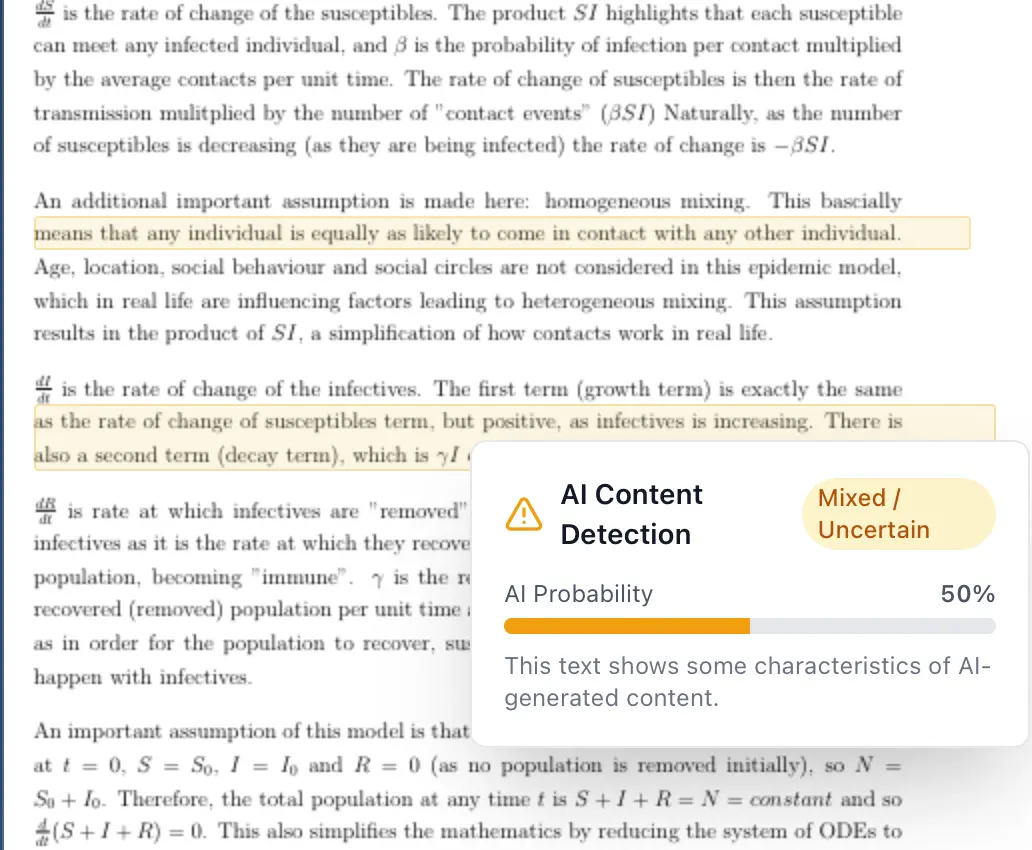
Get estimated marks by criterion, comments on your writing, and a clear list of what to fix first.
Common Mistakes to Avoid
- Describing instead of analyzing: Focus on analyzing the knowledge questions, not just describing examples.
- Using vague or unsupported claims: Back up your claims with evidence and reasoning.
- Ignoring different perspectives: Consider different viewpoints and acknowledge the limitations of your own perspective.
- Writing a poorly structured essay: Plan your essay carefully to ensure that your ideas are organized and flow logically.
- Plagiarism: Always cite your sources properly to avoid plagiarism.
The Role of AI in Modern Assessment
Modern technology is changing how we approach academic assessment. AI grading assistants can now help teachers maintain consistency and rubric alignment in their evaluations while saving valuable time. These tools use the same official IB criteria to provide detailed feedback and scoring, ensuring that assessments meet the high standards expected in IB programs.
For educators looking to simplify their grading process while maintaining the quality and consistency that IB assessments demand, AI grading assistance offers a powerful solution that complements traditional teaching methods.
Conclusion
Mastering the essay theory of knowledge criteria is essential for achieving success in the IB program. By understanding the assessment rubric, following the tips outlined in this guide, and avoiding common mistakes, you can write an essay that demonstrates your understanding of TOK concepts and earns you top marks. Remember to focus on analyzing knowledge questions, justifying your claims, considering different perspectives, and presenting your ideas in a clear and coherent manner.
Looking for more support with IB draft grading? Discover how AI grading assistants can help maintain consistency and rubric alignment in your evaluations while saving valuable time. Learn more about modern grading solutions designed specifically for IB educators.