TOK Exhibition Criteria Explained: How to Score High in Each Band
Struggling to understand the exhibition theory of knowledge criteria? This practical guide breaks down each criterion of the IB exhibition grading rubric, providing clear explanations, practical tips, and useful advice to help you achieve top marks. We'll also explore how modern technology, like AI grading assistants, can support both students and teachers in this crucial internal assessment.
What is the Exhibition Theory of Knowledge?
The Theory of Knowledge (TOK) Exhibition is an internal assessment component of the IB Diploma Programme. It requires students to explore how TOK manifests in the world around them. Students select three objects that connect to one of the prescribed titles issued by the IB and then craft an exhibition that demonstrates their understanding of the chosen title through the lens of these objects. It's a chance to showcase your critical thinking and analytical skills in a creative and engaging way.
Stuck on your IB draft?
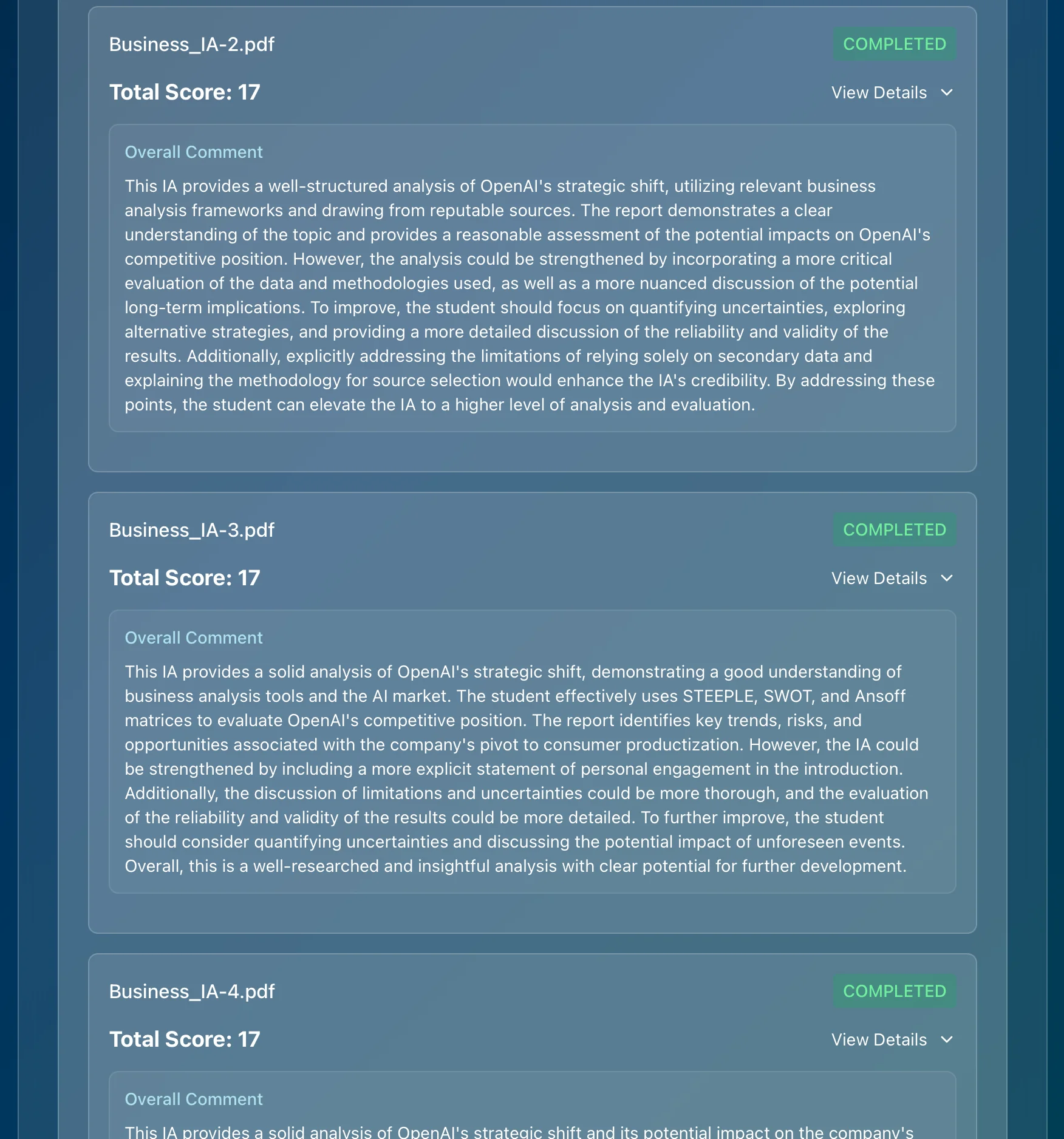
Get instant, detailed feedback on structure, evidence, and reasoning, then compare it with your current school materials.
Understanding the Grading Criteria
The TOK exhibition is not split into separate criteria. Your teacher gives one holistic mark out of 10, based on how well your three objects, each placed in a real-world context, show how TOK appears in the world around us through one of the IB's IA prompts. The mark bands below describe what each level looks like.
Detailed Breakdown of Exhibition Theory of Knowledge Criteria
Criterion names, marks, and mark bands below follow the IB subject guide. The band descriptions are our own plain-English summaries, so check your subject guide for the exact wording.
Criterion A: Exhibition as a whole (10 marks)
What it assesses: Whether the exhibition shows how TOK appears in the world around us, through three objects linked to one IA prompt.
Mark bands:
- 0 marks: Nothing in the work reaches the lowest band.
- 1-2 marks: Rudimentary: three objects without clear contexts, minimal links to the prompt, and little justification.
- 3-4 marks: Basic: three objects with implied contexts, basic but unconvincing links to the prompt, and superficial justification.
- 5-6 marks: Satisfactory: three objects, possibly with vague contexts, a partial explanation of how they link to the prompt, and some justification.
- 7-8 marks: Good: three objects with contexts, explained links to the prompt that may lack precision, and justified choices with many points supported by evidence.
- 9-10 marks: Excellent: three objects with specific real-world contexts, clear and well-explained links to the prompt, strong justification for each object, and good supporting evidence.
What to check in your draft:
- Three specific objects are identified in clear real-world contexts.
- Each object has a precise and well-explained link to the selected IA prompt.
- The contribution of each object is justified and supported with evidence.
Good to know:
- The exhibition receives one holistic mark out of 10.
- It must use one of the IB's IA prompts; with only two objects the maximum is 6, and with one object it is 3.
How to Excel in Your Exhibition Theory of Knowledge
- Start early: Don't wait until the last minute to start working on your exhibition. Give yourself plenty of time to brainstorm ideas, research your objects, and write your analysis.
- Choose a topic you're passionate about: This will make the process more enjoyable and help you stay motivated.
- Seek feedback: Ask your teacher, classmates, or friends to review your exhibition and provide constructive criticism.
- Practice your presentation: If you're presenting your exhibition in person, practice your delivery to ensure you're confident and engaging.
- Be creative and original: Don't be afraid to think outside the box and come up with unique and innovative ideas.
Check your own draft
Get estimated marks by criterion, comments on your writing, and a clear list of what to fix first.
Common Mistakes to Avoid
- Not using an IA prompt: Your exhibition must be built around one of the 35 IA prompts published by the IB, and all three objects must link to that same prompt.
- Plagiarizing content: All work must be original and properly cited.
- Going over the word limit: The commentaries on your three objects must stay within 950 words in total.
- Submitting a poorly written or presented exhibition: Pay attention to grammar, spelling, and formatting.
The Role of AI in Modern Assessment
Modern technology is changing how we approach academic assessment. AI grading assistants can now help teachers maintain consistency and rubric alignment in their evaluations while saving valuable time. These tools use the same official IB criteria to provide detailed feedback and scoring, ensuring that assessments meet the high standards expected in IB programs.
For educators looking to simplify their grading process while maintaining the quality and consistency that IB assessments demand, AI grading assistance offers a powerful solution that complements traditional teaching methods.
Conclusion
Mastering the Exhibition Theory of Knowledge criteria is essential for achieving success in this important IB assessment. By understanding the requirements of each criterion, following the tips outlined in this guide, and avoiding common mistakes, you can create an exhibition that showcases your critical thinking skills and earns you top marks.
Looking for more support with IB draft grading? Discover how AI grading assistants can help maintain consistency and rubric alignment in your evaluations while saving valuable time. Learn more about modern grading solutions designed specifically for IB educators.